

Dog Coughing - Causes, Warning Signs and What Could Be Behind It
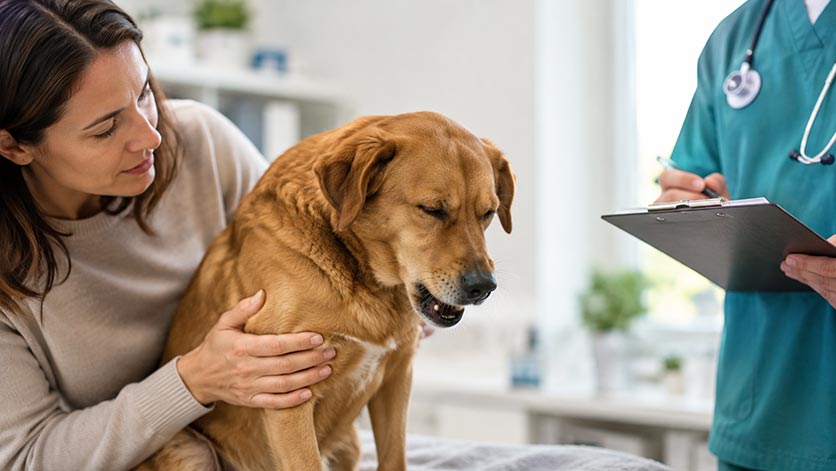
Coughing is first and foremost a protective reflex in dogs. It helps clear mucus, fluid, foreign bodies and other irritants from the airways. However, the sound of the cough alone is not enough to reliably identify the cause. A dry, high-pitched or honking cough, for example, can occur with both kennel cough and tracheal collapse.
The overall picture is what matters: How long has the dog been coughing? Does it happen at rest or during exercise? Does the dog gag afterwards? Are there other symptoms such as fever, breathing difficulties or reduced stamina?
What Does a Dog’s Cough Sound Like?
The type of cough can provide the veterinarian with useful clues. It cannot replace a proper examination.
Dry and Honking Cough
A dry cough often sounds harsh, barking or noticeably honking. Possible causes include kennel cough, irritation of the trachea or tracheal collapse.
Tracheal collapse often causes a recurring dry cough that can sound similar to the honk of a goose. Small and toy dog breeds are affected more often than larger dogs.
In some dogs, coughing becomes worse during excitement, warm weather or physical activity. Pressure or pulling around the neck may also trigger symptoms. A dog that repeatedly coughs when pulling on the leash should therefore be examined by a veterinarian.
Wet or Productive-Sounding Cough
A deep, wet-sounding cough in dogs can indicate disease affecting the bronchi or lungs. Possible causes include bronchitis and pneumonia in dogs.
Particular attention is needed if the dog also develops fever, loss of appetite, marked tiredness or noticeably faster or laboured breathing.
Dog Coughing and Gagging
The combination dog coughing and gagging is often mistaken for vomiting. With kennel cough, strong coughing episodes can be followed by retching or gagging. Owners may then think that something is stuck in the dog’s throat.
Sudden coughing while eating, playing or sniffing, however, can also occur when a foreign object enters or irritates the airway. Gagging alone is therefore not enough to diagnose kennel cough.
Kennel Cough in Dogs: What Causes It?
Kennel cough in dogs is commonly used to describe infectious tracheobronchitis and conditions within the wider Canine Infectious Respiratory Disease Complex.
The name can be misleading. A dog does not need to have stayed in a kennel to become infected.
Several viruses and bacteria may be involved, including Bordetella bronchiseptica, canine parainfluenza virus and canine adenovirus type 2.
Transmission is particularly common in places where many dogs have close contact, such as:
- dog training classes
- boarding kennels
- animal shelters
- dog day-care facilities
- veterinary clinics
- group walks or dog gatherings
Typical coughing may begin around five to ten days after contact with infected or susceptible dogs. In uncomplicated cases, the cough often becomes milder after the first few days, although symptoms may continue for around ten to twenty days.
In otherwise healthy adult dogs, kennel cough often has a mild course. Puppies, elderly dogs and animals with existing health problems may be more vulnerable to complications such as bronchopneumonia.
Tracheal Collapse: When the Windpipe Becomes Unstable
With tracheal collapse in dogs, parts of the windpipe lose their normal rigidity. The trachea can flatten during breathing and restrict airflow.
A dry, recurring and distinctly honking cough is typical. Small dog breeds are affected particularly often. Heat, excitement and exercise can make symptoms worse. Excess body weight may also aggravate breathing problems.
Because tracheal collapse can sound very similar to kennel cough, reliably distinguishing between the two at home is difficult.
Bronchitis and Pneumonia in Dogs
Inflammatory diseases of the respiratory tract are another possible cause of coughing in dogs.
Chronic bronchitis is seen more often in middle-aged and oldr dogs. Irritants such as cigarette smoke can aggravate existing respiratory disease. Passive smoking is therefore harmful to dogs as well.
Pneumonia in dogs requires greater caution. It may be caused by different infectious agents. Pneumonia can also develop if stomach contents enter the airways after vomiting or regurgitation. This is known as aspiration pneumonia.
Warning signs include coughing and fever, severe lethargy, loss of appetite and noticeably rapid or difficult breathing.
Lungworms Can Cause Coughing Too
Parasites should also be considered when a dog has a persistent cough or when the cause remains unclear.
Lung parasites found in Europe include Angiostrongylus vasorum and Crenosoma vulpis. Angiostrongylus vasorum, sometimes called the French heartworm, can affect the heart and pulmonary circulation.
Parasitic infections are also a good example of why coughing should not automatically be treated with antibiotics. If parasites are causing the symptoms, antibacterial medication will not treat the underlying problem.
Can a Dog Cough Because of Heart Disease?
Yes. Cardiac coughing in dogs is possible, although the term can easily lead to incorrect assumptions.
With left-sided heart failure, fluid may accumulate in the lungs. This pulmonary oedema can be associated with rapid or laboured breathing and reduced exercise tolerance.
One point is often overlooked: an oldr dog with a heart murmur and a cough is not automatically coughing because of heart disease. Respiratory disease can exist at the same time, particularly in oldr small-breed dogs.
Signs that can make significant heart or lung disease more concerning include:
- markedly reduced exercise tolerance
- rapid breathing at rest or while sleeping
- difficulty breathing
- weakness
- fainting episodes
- collapse
- bluish or grey gums or mucous membranes
These symptoms warrant prompt veterinary assessment.
Coughing or Reverse Sneezing?
Not every unusual breathing sound is actually a cough. Reverse sneezing in dogs is often mistaken for coughing.
During a reverse sneezing episode, the dog suddenly draws air forcefully and noisily through the nose several times. The head and neck are often extended while the mouth remains mostly closed. Episodes are usually brief, and many dogs behave completely normally afterwards.
Possible triggers include irritation of the nose or throat, dust, allergens, excitement and eating or drinking too quickly. Foreign bodies and respiratory disease can also sometimes be involved.
When Should a Coughing Dog See a Veterinarian?
A single brief cough after swallowing something awkwardly does not necessarily indicate disease. Recurrent or worsening coughing in dogs, however, should be investigated.
Immediate veterinary care is required if the dog:
- is clearly struggling to breathe
- breathes with an open mouth while resting
- shows severely laboured breathing
- develops blue or grey gums or mucous membranes
- collapses or loses consciousness
- appears extremely weak
Dogs experiencing severe respiratory distress may extend the head and neck forward and hold their elbows away from the body in an attempt to breathe more easily.
Coughing with fever, weight loss, poor appetite, nasal discharge or a clear reduction in stamina should also be assessed by a veterinarian.
How Is the Cause of a Dog’s Cough Diagnosed?
The veterinarian will normally begin with the dog’s medical history and a physical examination. Useful information includes how long the coughing has been present, what it sounds like, when it occurs and whether the dog has recently been in contact with other dogs or travelled abroad.
Depending on the findings, further diagnostic tests may include:
- chest X-rays
- echocardiography
- ECG
- PCR testing when an infectious disease is suspected
- testing for lung parasites
- bronchoscopy or airway lavage
Chest X-rays can help identify changes affecting the lungs, bronchi and trachea. They may also reveal signs consistent with pneumonia, pulmonary oedema or other diseases.
What Can I Give My Dog for a Cough?
Human cough medicines should not be given to dogs without veterinary advice. The same applies to antibiotics, expectorants and other medication.
Coughing serves an important protective function. Suppressing the reflex without knowing the cause may be problematic, especially when secretions need to be cleared from the airways.
Kennel cough does not automatically require antibiotics either. Treatment depends on the underlying cause, the severity of symptoms and the dog’s general condition.
Careful observation can give the veterinarian valuable information: What does the cough sound like? When does it occur? Does the dog have fever, difficulty breathing or reduced stamina? Recording a short video of a coughing episode can also be useful if the dog does not cough during the veterinary appointment.