
Dog Won’t Eat: 12 Causes & What Really Helps
The bowl is ready, the food is fresh, and your dog has been eating the same meal for months — yet suddenly, nothing happens. A quick glance at the bowl, maybe a cautious sniff, and then your dog turns away. For many owners, that is exactly when the worrying starts. Is it just a phase? Is the dog simply not hungry? Or could there be something more serious behind it?
If a dog skips one meal, that is not automatically a reason to panic. Healthy adult dogs do not always eat exactly the same amount every day. A quiet day, plenty of treats, warm weather or simply a lower energy requirement can reduce appetite. What matters much more is whether the behaviour has suddenly changed. A dog that normally appears the moment the food cupboard opens and then unexpectedly refuses even a favourite meal deserves a closer look.
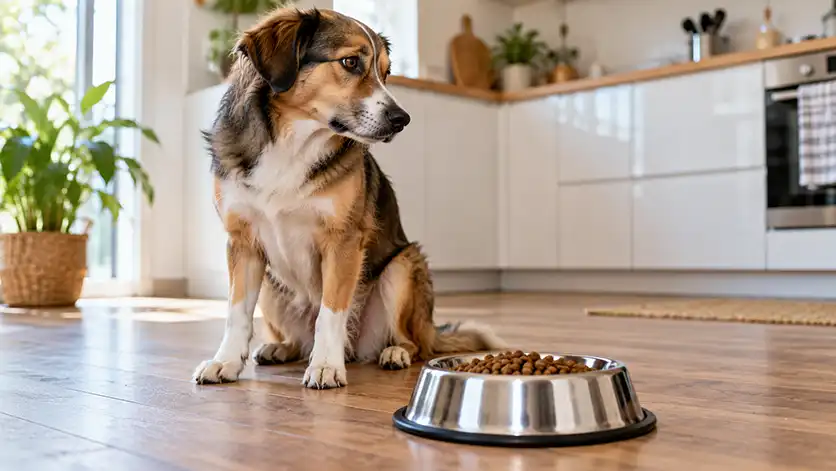
It also helps to watch what happens at the bowl. Some dogs show interest, try to take a bite and then drop it again. Others have no interest in food at all. That difference can be important. Sometimes the problem is not a lack of appetite. A dog may actually want to eat but be unable to chew comfortably because of dental pain, mouth problems or another physical issue.
Why a Dog Suddenly Stops Eating
The causes can be surprisingly simple. One of the most common reasons is that the dog is simply full. Small snacks add up quickly over the course of a day. Training treats, a piece of cheese here, a chew there and perhaps a little food from the table can already account for a significant part of the daily calorie intake. By the evening, the regular meal may no longer seem particularly appealing. Anyone who wants to know whether their dog is really eating too little should spend one day writing down everything the dog receives.
Stress can also have a strong effect on appetite. Dogs are often more sensitive to change than they appear. Moving house, travelling, visitors, a new family member, another dog in the household or the absence of a familiar person can all affect eating habits. Even the position of the food bowl can matter. If it is placed in a busy hallway, next to a loud appliance or somewhere where people and animals are constantly passing by, some dogs simply do not feel comfortable enough to eat. A quiet, consistent feeding area can make a noticeable difference.
A change of food is another classic reason. What seems like a small change to us may smell, taste and feel completely different to a dog. Even a slightly altered recipe from the same brand can put some sensitive dogs off. At the same time, an abrupt food change can upset the digestive system. Soft stools, gas, stomach noises or reduced appetite are not unusual. For that reason, a new food should usually be introduced gradually over several days.
There are also dogs that quickly learn to wait for something better. The normal food remains untouched and, out of concern, the owner adds chicken, cheese, sausage or another favourite treat. The dog soon understands that waiting can pay off. This is not calculated behaviour in the human sense; it is simply learned behaviour. In an otherwise bright, active dog without any other symptoms, this pattern can definitely contribute to repeated food refusal.

When Pain, Nausea or Illness Is the Real Problem
Things look different when the dog appears hungry but seems unable to eat properly. Dental pain and problems in the mouth are often underestimated. Tartar, inflamed gums, a broken tooth or a small injury can make chewing uncomfortable or painful. One typical sign is that a dog suddenly refuses dry food but still accepts softer food. Bad breath, increased drooling or chewing only on one side can also point in this direction.
Nausea is another common reason why dogs refuse food. The dog may have eaten something outside that did not agree with its stomach, the last meal may have been too rich, or the digestive system may simply be irritated. Dogs with nausea often show more than just a poor appetite. They may lick their lips frequently, swallow, eat grass or appear restless. A particularly typical pattern is when the dog approaches the bowl, sniffs the food and then immediately turns away again.
Pain elsewhere in the body can also reduce appetite. A dog with back pain, joint pain or an injury may eat less even though the digestive system itself is fine. Pain affects the whole body. The dog may sleep more, move more carefully, hesitate when getting up or seem less interested in walks.
Infections and fever can have the same effect. Just as people often lose their appetite when they are ill, dogs can stop eating when the body is dealing with inflammation or infection. If loss of appetite comes together with lethargy, shaking, coughing, diarrhoea or vomiting, it should be taken seriously.
Diseases affecting internal organs can also begin with rather subtle signs. Kidney or liver problems, for example, may develop gradually. The dog starts eating less, becomes more tired or slowly loses weight. Increased drinking or more frequent urination can provide further clues. Especially in oldr dogs, persistent loss of appetite should never simply be blamed on age.
The pancreas can also be involved. With pancreatitis, dogs may suffer from severe nausea and abdominal pain. Many refuse food completely, appear weak or vomit. Sudden symptoms after a particularly fatty meal deserve special attention.
A swallowed foreign object is another potentially serious cause. Dogs are remarkably inventive when it comes to swallowing things that were never meant to be eaten. Socks, toy fragments, plastic pieces or bone material can become lodged in the stomach or intestines. Repeated vomiting, a painful abdomen, heavy drooling, restlessness or complete food refusal are warning signs that require prompt veterinary attention.
Medication can affect appetite too. Some drugs cause nausea or alter the taste in the mouth. If food refusal begins shortly after a new treatment is started, the veterinarian should be informed. Medication should never be stopped or changed without professional advice.
What Really Helps When a Dog Refuses Food
The first step should not be to open five different types of food. It is usually much more useful to look at the dog as a whole. Is the dog drinking normally? Still alert? Interested in walking? Has there been vomiting? Has the stool changed? Does the abdomen seem sensitive? Can the dog chew normally? These observations often provide more useful information than the full bowl itself.
In a healthy adult dog that skips only one meal and behaves completely normally otherwise, it is usually reasonable to stay calm and observe. Fresh water should always be available. The usual food can simply be offered again at the next regular feeding time. Wet food can be warmed slightly, which makes the smell stronger and can make it more appealing. A small amount of warm water can have a similar effect.
What is less helpful is constantly adding new extras. If every refusal is followed by cheese, sausage or highly attractive treats, the dog may quickly learn to wait for the more exciting alternative. Regular feeding times and a clear routine are usually more useful in such cases.
For nervous dogs, the feeding environment is worth reviewing as well. A quiet place without constant traffic can make a bigger difference than switching brands. If dental problems are suspected, the mouth can be checked carefully — but only if the dog tolerates this calmly. Visible injuries, severe redness or a damaged tooth should always be assessed by a veterinarian.
Caution is advisable with home remedies. A little plain cooked chicken may be appealing to a healthy dog, but it can be inappropriate for dogs with allergies, kidney disease or pancreatic problems. Human medications should never be given without veterinary guidance. Painkillers such as ibuprofen or paracetamol can be dangerous for dogs.
When Loss of Appetite Becomes a Veterinary Issue
One missed meal in an otherwise healthy adult dog is usually not an emergency. The situation changes when food refusal persists or other symptoms appear. Repeated vomiting, severe or bloody diarrhoea, a swollen or painful abdomen, extreme tiredness, shaking, breathing problems or heavy drooling are clear warning signs.
If a dog stops drinking as well, the situation should be taken seriously. Puppies, very small dogs, senior dogs and animals with chronic illnesses should generally be assessed earlier because they can tolerate fluid and energy loss less well.
The most important comparison is always with the dog’s normal behaviour. A dog that has always eaten slowly and selectively is different from one that normally empties every bowl within seconds and suddenly shows no interest at all.
Loss of appetite is therefore not a diagnosis. It is a symptom. Sometimes the explanation is as simple as a full stomach or a stressful day. Sometimes the cause is dental pain, nausea or a food change. And sometimes refusing a meal is one of the first signs that something is medically wrong.
Owners who know their dog well have an advantage here. In the end, it is not just the question of whether the bowl is empty. What matters is how the dog behaves overall. That broader picture often tells you whether it is reasonable to wait for the next meal — or whether it is better to call the veterinarian sooner rather than later.