

Why Is My Dog Constantly Scratching? Allergies, Parasites, or a Skin Problem?

Your dog has barely settled down for the evening when the scratching starts again. After a walk, he spends minutes licking his paws, and while petting him, you notice a red patch on his belly. When your dog is constantly scratching, the sound is often what you notice first. Other signs are quieter. Your dog might chew at his coat, rub his muzzle against the carpet, or shake his head repeatedly. These can all be signs of itching in dogs.
An occasional scratch is part of everyday life. Pay attention if your dog regularly stops playing to scratch, struggles to settle at night, or keeps going back to the same spot. Where and when the itching occurs can offer some clues. If he suddenly starts licking just one paw after a walk, take a careful look between his toes. There could be a small injury or something lodged there. If several paws are affected and his ears are irritated too, an allergy is one possible explanation.
Fleas, Mites, or Allergies? What the Skin and Coat Can Tell You
If you suspect fleas on your dog, check the lower back, the base of the tail, and the backs of the thighs. These are common places to find irritated skin, small scabs, or thinning fur in dogs with flea allergy dermatitis. Even a few flea bites can cause intense itching in a sensitive dog. Flea bites are still a possibility if you look through the coat and see no fleas. If your vet confirms an infestation, managing it may also involve the other pets in your home, along with bedding and blankets.
Mites in dogs are another possibility. Sarcoptes mites, which cause sarcoptic mange, can trigger severe itching. Crusty patches along the edges of the ears, on the elbows, or around the hocks can offer clues. Mention it at the appointment if another dog in your household has started scratching more than usual. Your vet can consider that alongside the skin changes and how the symptoms have developed.
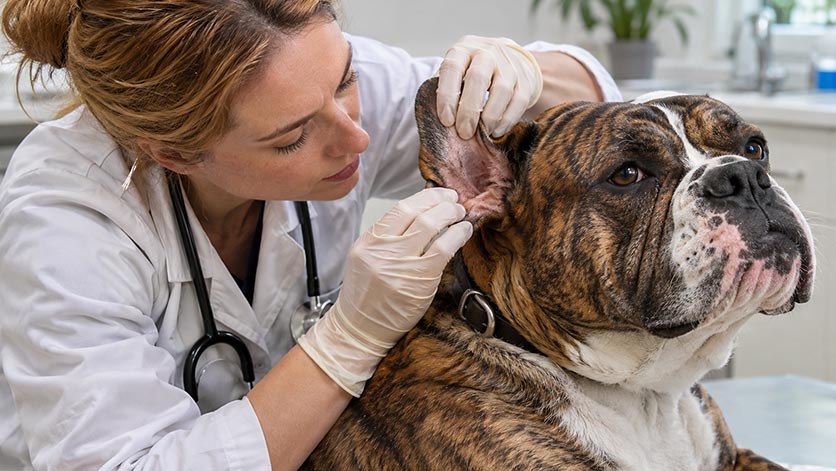
If paw licking starts around the same time each year, such as in spring, environmental allergies in dogs are a possibility. Common triggers include pollen and dust mites. Dogs with atopic dermatitis often have irritation around the paws, face, ears, or skin folds. Depending on the trigger, the itching can be seasonal or last all year. For some dogs, recurring ear infections are the first sign owners notice. Making a note of when the symptoms start gives you something to compare if your dog starts scratching again at the same time next year.
A food allergy in dogs can look much the same. Some dogs also develop digestive symptoms. Even a food your dog has eaten for a long time can be involved. Your vet may recommend an elimination diet to investigate. It often lasts around eight weeks, though some dogs need longer. During that time, your dog eats only the agreed diet. A piece of cheese from the table, a chew, or a flavored medication can make the results harder to interpret. Tell your vet about any medications and supplements your dog takes regularly. If symptoms improve, your vet may guide you through reintroducing the previous food to see whether they return.
Sometimes changes in the skin make the itching worse. Repeated scratching or licking can leave the skin raw. Bacteria or yeast can multiply on inflamed skin and add to the itch. An unusual smell, greasy skin, scabs, or bald patches can be clues. A hot spot on a dog often appears as a red, weeping patch that can spread quickly as the dog continues to lick or chew it. Under a thick coat, you might only notice it once the fur feels damp or starts to clump together.
What to Look For and When to Take Your Dog to the Vet
In good light, check the spots your dog scratches or licks. Gently part the fur and look at the belly, under the front legs, in the skin folds, and between the toes. Check for redness, hair loss, or damp patches. A photo can show whether a patch has changed by the time of your appointment. A short video can show how often your dog shakes his head or how long he spends licking a paw, even if he seems perfectly settled at the clinic.
The timing of the symptoms can help your vet work out what is going on. When did the scratching become more frequent? Does it happen mainly after walks or also on days when your dog spends more time indoors? Has he had a bath with a new shampoo? Have you changed his food, treats, or chews? Write down which flea or mite treatment he last received and when. If the problem has happened before, note whether it started in the same season and how long any treatment helped. A few specific observations can give your vet more to work with than a long list of suspected causes.
Book an appointment if the scratching persists, keeps coming back, or is keeping your dog awake. Have open, weeping, or painful skin patches checked promptly. The same applies if your dog frequently shakes his head, an ear smells unpleasant, or he pulls away when you touch it. Until your dog has been examined, avoid using creams meant for people, essential oils, or leftover ear drops. If you suspect food, write down what your dog has been eating and discuss the next steps with your vet before trying several different foods.
At the appointment, your vet will examine your dog’s skin and ears. Depending on what they find, they may use a flea comb to look for signs of fleas, take a skin scraping to check for mites, or examine a skin sample under a microscope for bacteria and yeast. If they find an infection, they can treat it. At a follow-up visit, your vet can check whether the itching has eased as the inflammation has settled or whether further tests would help. If your dog has been sleeping poorly for weeks or has licked his skin raw, your vet can help relieve the itch while investigating what is causing it.