

Your dog has a fever
How to recognise the signs and take their temperature correctly
If you suspect your dog has a fever, you need a reliable temperature reading: tiredness, shivering or a warm nose alone are not enough to diagnose it. The most reliable method is to take their temperature rectally using a digital thermometer. A temperature of around 40 °C or higher, breathing difficulties, collapse, seizures or possible overheating require immediate veterinary help, even if you have not yet taken a reading.
The key points at a glance
According to the Merck Veterinary Manual, a dog's normal rectal temperature is approximately 37.5–39.2 °C. Take the reading when your dog is resting, if possible. Severe symptoms are an emergency regardless of the temperature. Do not give human medicines without instructions from a vet.
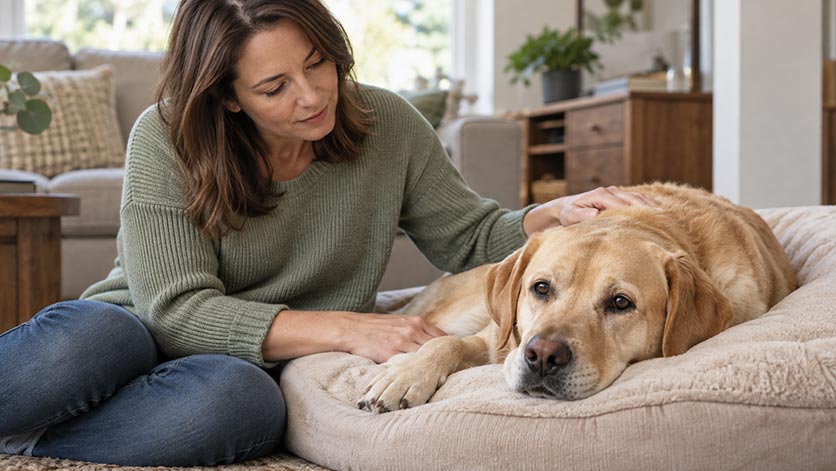
Changes in behaviour can be a reason to check your dog’s temperature. AI-generated illustration.
Dogs have a higher body temperature than humans. A temperature that would feel noticeably too warm in your own body may be perfectly normal for your dog. The Merck Veterinary Manual gives a normal rectal temperature range of 37.5–39.2 °C. This is a reference range, rather than a specific target temperature for every individual dog.
What happened just before the reading also matters. A dog who has been running around or struggling during an examination may have a raised temperature without having a true fever. Where possible, take the reading after a quiet rest in a comfortably temperate environment. For an otherwise well dog, Evidensia recommends at least 20 minutes of rest. Do not wait for this period to pass if there are warning signs.
This table applies to rectal readings. Skin, forehead or armpit readings cannot be treated as equivalent. It describes the action to take, rather than providing a diagnosis.
Fever and overheating develop in different ways. In a true fever, the temperature regulation centre in the brain raises the body’s target temperature, for example as part of an inflammatory response. With overheating, the body cannot release heat quickly enough. Two dogs can therefore have the same temperature reading yet need different help. A hot car or strenuous activity in warm weather are important clues to overheating. It is not always possible to tell the difference reliably at home.
How to tell that something is wrong
Often, the first clue is a change in everyday behaviour. Your dog stays lying down even though they would usually jump up as soon as you reach for the lead. They leave their food untouched or seem reluctant to move. These observations are a reason to look more closely and, where appropriate, check their temperature. They do not yet establish that your dog has a fever.
Possible accompanying signs include low energy, a reduced appetite, shivering and faster breathing. Some dogs appear stiff or unusually withdrawn. Other symptoms may develop depending on the underlying condition. What matters is the change from their usual behaviour: a dog who suddenly barely responds to you needs prompt help.
The familiar nose test is of little use here. A warm or dry nose is not a reliable sign of fever. Its temperature and moisture can change in a healthy dog, too. Equally, a cool nose does not rule out a fever. Feeling your dog’s belly and finding it warm is no substitute for a thermometer.
Fever in dogs is a symptom, not a diagnosis in its own right. Possible causes include infections, inflammation that is not caused by infection, conditions involving an abnormal immune response, and cancer. A single temperature reading cannot identify any of these causes. At the veterinary practice, the medical history and examination findings are therefore considered together; blood or urine tests may be needed depending on the findings.
Mild tiredness and a low-grade fever can also occur after a vaccination. However, this does not automatically make more pronounced symptoms harmless. Tell the practice about the vaccination and when the symptoms developed. Facial swelling, breathing problems or collapse require immediate help. Such severe reactions are rare, but must be taken seriously.
How to take your dog’s temperature correctly
For home use, choose a digital thermometer with an easy-to-read display and, preferably, a flexible tip. Use it only for your dog and label it accordingly. Also have a suitable lubricant, such as a water-based gel, and the materials needed to clean the thermometer afterwards ready. A glass thermometer is not a good choice because it can break.
A rectal reading is reliable and is regarded as the clinical standard in veterinary medicine. A human forehead thermometer measures a different temperature and cannot simply be used as a substitute. An armpit reading is also less accurate.
Choose a quiet spot with a non-slip surface. A second person whom your dog knows can help by reassuring them and gently keeping them still. If you have never done this before, ask the practice to show you how when you have the opportunity. It is easier while your dog is healthy and relaxed.
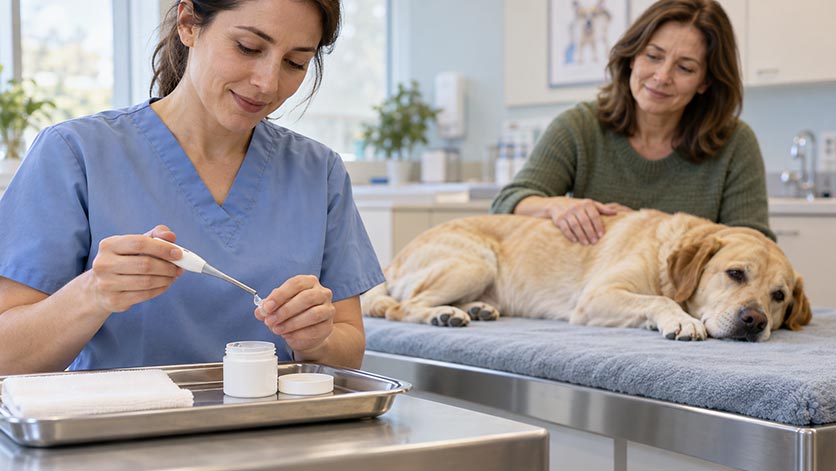
A suitable digital thermometer is part of the preparation for taking a temperature. AI-generated illustration.
How to take a rectal temperature
1. Prepare: Switch on the thermometer and apply a little suitable lubricant to the sensor tip.
2. Position calmly: Gently help your dog into a relaxed position lying on their side. A second person can help prevent sudden movements.
3. Insert gently: Carefully lift the tail and slowly insert the tip into the anus. The sensor tip must be properly positioned within the rectum to make sufficient contact. The appropriate depth depends on the dog and the device; a single depth in centimetres would not be suitable for all dogs.
4. Keep hold of it: Hold the thermometer securely throughout the measurement. Do not let go of it or apply pressure.
5. Read the result: Wait for the measurement signal, gently remove the thermometer and note the reading and the time.
6. Clean: Remove any soiling, then clean or disinfect the device following the manufacturer’s instructions. [2, 11, 12]
Stop if your dog moves out of position, shows signs of pain or you feel resistance. An unsuccessful attempt is not a reason to restrain them more firmly or push the thermometer in. In this situation, have their temperature taken at the practice. This also protects you from a defensive bite. [2]
Also note whether your dog had been running or was very excited beforehand. A number without that information can be misleading when you speak to the practice later. Implausible readings may be caused by measurement errors, such as inadequate contact or faeces around the sensor tip. Only repeat the measurement if your dog calmly allows it and there are no urgent symptoms. [2]
What you can do now and when your dog needs a vet
While waiting to speak to a vet, let your dog rest in a quiet place at a comfortable temperature and avoid exertion. Put fresh water within reach. Your dog may drink, but should not be forced to do so or have water poured into their mouth. Rest and water are no substitute for an examination if the temperature remains raised or your dog is generally unwell.
Do not reach for medicines from your own medicine cabinet. Ibuprofen can cause serious side effects in dogs; paracetamol can cause liver damage, among other problems. A medicine previously prescribed for another dog is not a safe solution either. The vet will decide whether treatment is needed and which treatment is appropriate, based on the cause and the individual dog.
Do not routinely use cold baths to treat a suspected true fever. In this situation, the body’s target temperature is raised. Cooling in this way can work against its own temperature regulation.
Possible heatstroke requires different action: Move your dog out of the heat, immediately start cooling their body with cool running water, and arrange emergency veterinary help at the same time. Moving air helps the body release heat. Your dog must then be taken promptly to a veterinary practice or hospital. Do not wait for a temperature reading or for a full recovery. Keep the head clear and do not pour water into the mouth. Discuss further cooling with the emergency vet; it should not lead to hypothermia.
Seek emergency veterinary help immediately: Breathing difficulties, collapse, seizures, severe lethargy or possible heatstroke are warning signs, regardless of the measured temperature. A reading of around 40 °C or higher also needs immediate veterinary assessment.
An examination may also be urgent below 40 °C. If the temperature remains raised after rest, your dog is not eating or their behaviour is noticeably different, call the practice. For puppies, oldr dogs and dogs with existing medical conditions, seek advice early rather than waiting for a particular temperature threshold.
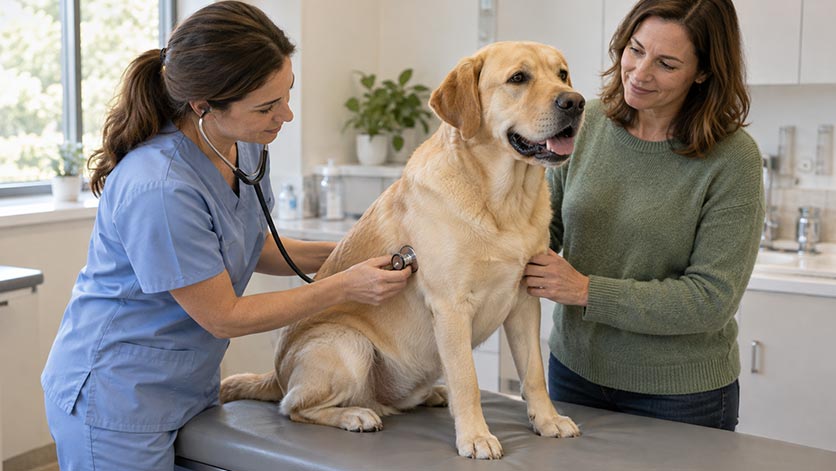
An examination helps identify the cause of the symptoms. AI-generated illustration.
When you call, have the temperature, time, measurement method and observed symptoms ready. Mention exposure to heat, recent vaccinations, travel and any medicines already given. A specific description is useful: “They have not eaten since this morning and have stayed lying down; after a rest, I measured a rectal temperature of 39.7 °C.” This helps the practice assess how urgent the situation is.
Frequently asked questions about fever in dogs
Can I recognise a fever without a thermometer?
You can notice signs of illness, but you cannot reliably determine body temperature from the nose or by touch. Taking a temperature establishes whether it is raised; the reading alone does not establish the cause.
Does 39.5 °C already mean a fever?
This reading is above the normal reference range given here. Whether it is due to a true fever, excitement or overheating depends on the circumstances. If your dog has symptoms or their temperature remains raised, you need veterinary advice.
Can I take my dog’s temperature in the ear?
This is possible with suitable devices. Ear anatomy, wax and ear infections can affect the result. For a reliable check at home, a rectal reading is usually the better option.
What if my dog will not let me take their temperature?
Stop and have the temperature taken at the practice. If there are warning signs, arrange help immediately. The absence of a reading must not delay treatment.
Can I give medicine to bring the fever down?
Only on explicit instructions from a vet for this particular dog. Human medicines and leftover veterinary medicines are not suitable for self-treatment.